Maryland Notaries: Stay Informed About the Task Force to Study Deed Fraud
Maryland has established a Task Force to Study Deed Fraud to examine fraudulent property transactions, identify prevention and detection strategies, and recommend measures to better protect property owners throughout the state.
Maryland Notaries In Action (MDNIA) is monitoring this initiative as part of its ongoing efforts to keep Maryland notaries informed about legislative developments, government activities, regulatory changes, and other matters affecting the notarial profession.
Because notaries frequently perform notarial acts involving real estate documents, including deeds and other instruments affecting property ownership, the Task Force's work is particularly relevant to the notary community.
What Established the Task Force?
The Maryland General Assembly passed House Bill 130, enacted as Chapter 399 of the Acts of 2026, establishing the Task Force to Study Deed Fraud.
The legislation directs the Task Force to examine deed fraud in Maryland, research practices in other states, and develop recommendations for detecting and preventing fraudulent property transactions.
Official Legislative Resource:House Bill 130 — Maryland General Assembly
What Is the Task Force Responsible for Studying?
Under the legislation, the Task Force has six primary responsibilities:
Examine deed-fraud incidents in Maryland. Review complaints, resolved cases, restitution, and geographic and demographic trends.
Research other states' approaches. Examine how other jurisdictions identify, prevent, and respond to deed fraud.
Identify fraud patterns. Study the methods used by perpetrators and patterns involving victims.
Recommend deed-fraud detection tools. Evaluate technologies and procedures that could help identify fraudulent activity.
Assess the economic impact on victims. Examine the financial consequences experienced by affected property owners.
Recommend statewide strategies. Identify ways Maryland can improve deed-fraud prevention, detection, and coordination among government agencies.
The Task Force must submit its findings and recommendations to the Maryland General Assembly by July 1, 2028.
When Did the Task Force First Meet?
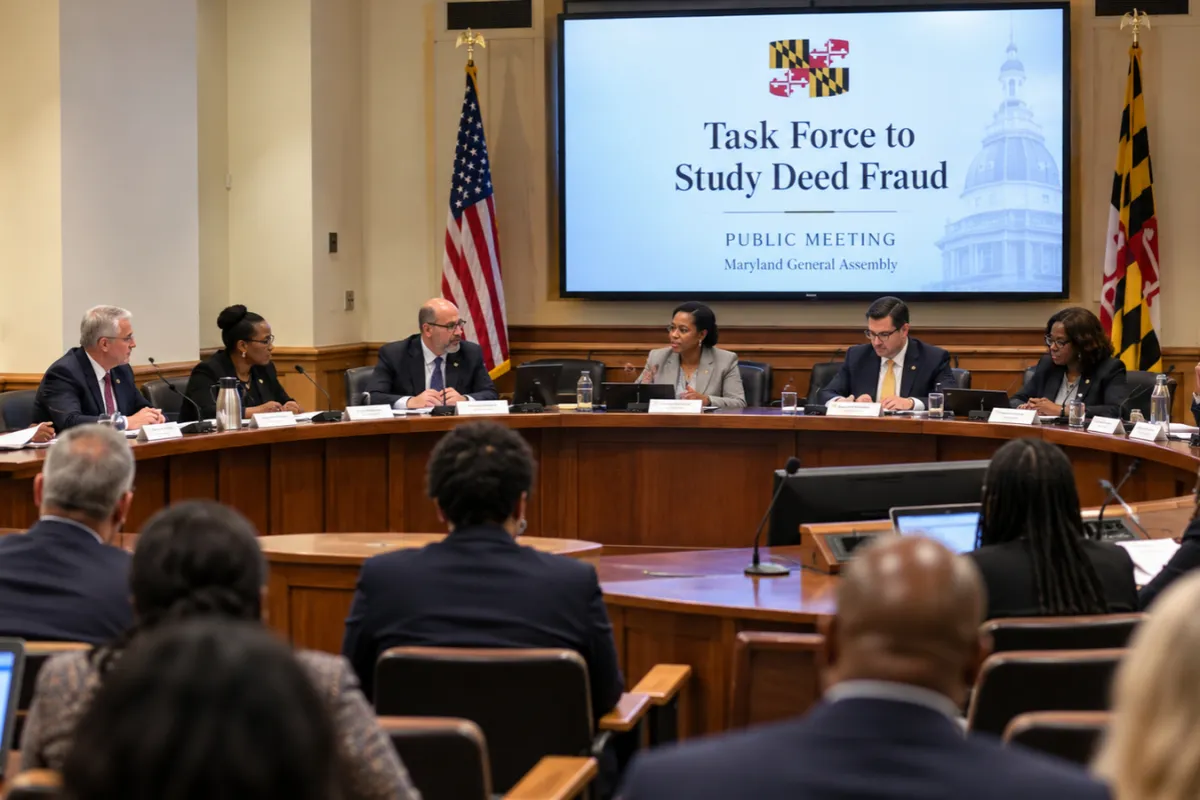
The Task Force held its first public meeting on October 14, 2026.
This meeting marked the beginning of its formal work examining deed-fraud concerns and potential solutions for Maryland property owners.
MDNIA encourages notaries and other interested individuals to review available meeting materials and follow upcoming meetings to better understand the issues under consideration.
Who Is Represented on the Task Force?
The legislation provides for representation from several government agencies and professional sectors, including:
Maryland State's Attorneys' Association
Maryland Judiciary
State Department of Assessments and Taxation
Maryland Legal Services Corporation
Department of Housing and Community Development
Land title insurance industry
Notary public profession
This composition brings together perspectives involving criminal prosecution, land records, property assessment, housing, legal assistance, real estate transactions, and notarization.
Official Resource:Maryland State Archives — Task Force to Study Deed Fraud
Why Should Maryland Notaries Pay Attention?
Notaries play an important role in real estate transactions by performing notarial acts on documents that may affect property ownership.
Although notaries are not responsible for determining the legal validity of property transfers or investigating ownership disputes, they are responsible for properly performing their notarial duties in accordance with applicable law.
Fraudulent real estate transactions may involve forged signatures, identity misrepresentation, false notarizations, or unauthorized property transfers.
The Task Force's findings and recommendations could influence future legislation, administrative procedures, fraud-detection practices, and professional expectations affecting real estate transactions.
For Maryland notaries, following these developments is an opportunity to stay informed about matters directly connected to the documents and transactions they encounter.
What Has MDNIA Identified So Far?
One issue deserving further examination is the availability of reliable statewide deed-fraud statistics.
Maryland's legislative fiscal analysis for House Bill 130 includes information about counterfeiting-related criminal charges. However, the available figures do not establish how many of those cases specifically involved fraudulent deeds.
This distinction matters when evaluating the scope of deed fraud and determining which prevention measures may be most effective.
Another area worth examining is the use of property-record notification systems.
Some jurisdictions outside Maryland offer electronic notification programs that alert enrolled property owners when certain documents are recorded in public land records.
Such programs do not prevent every fraudulent recording, but they may help property owners become aware of suspicious activity sooner.
MDNIA will continue examining relevant developments and sharing information as it becomes available.
Follow Maryland General Assembly Dates, Meetings & Government Activities
Information concerning the Task Force to Study Deed Fraud has been incorporated into MDNIA's Maryland General Assembly Dates of Interest webpage.
This resource organizes important legislative dates, government meetings, task force activities, and official links relevant to the Maryland notary community.
Explore Maryland General Assembly Dates of Interest
MDNIA will continue monitoring official Task Force announcements and sharing updates, including notification when the next public meeting is scheduled.
Help Keep Maryland Notaries Informed
Know a Maryland-commissioned notary or a notary professional involved in Maryland real estate transactions?
Share this article with them.
Whether their work involves general notarizations, real estate signings, remote online notarizations, or other notarial services, awareness of legislative and government developments can help professionals stay informed about changes affecting the industry.
Readers are also encouraged to subscribe to the Maryland Notaries In Action newsletter for updates on legislation, regulatory developments, public meetings, government initiatives, and other matters relevant to the notarial profession.
Subscribe to the MDNIA Newsletter
Stamp Together. Grow Together.
Maryland Notaries in Action (MDNIA)
Email: [email protected]


